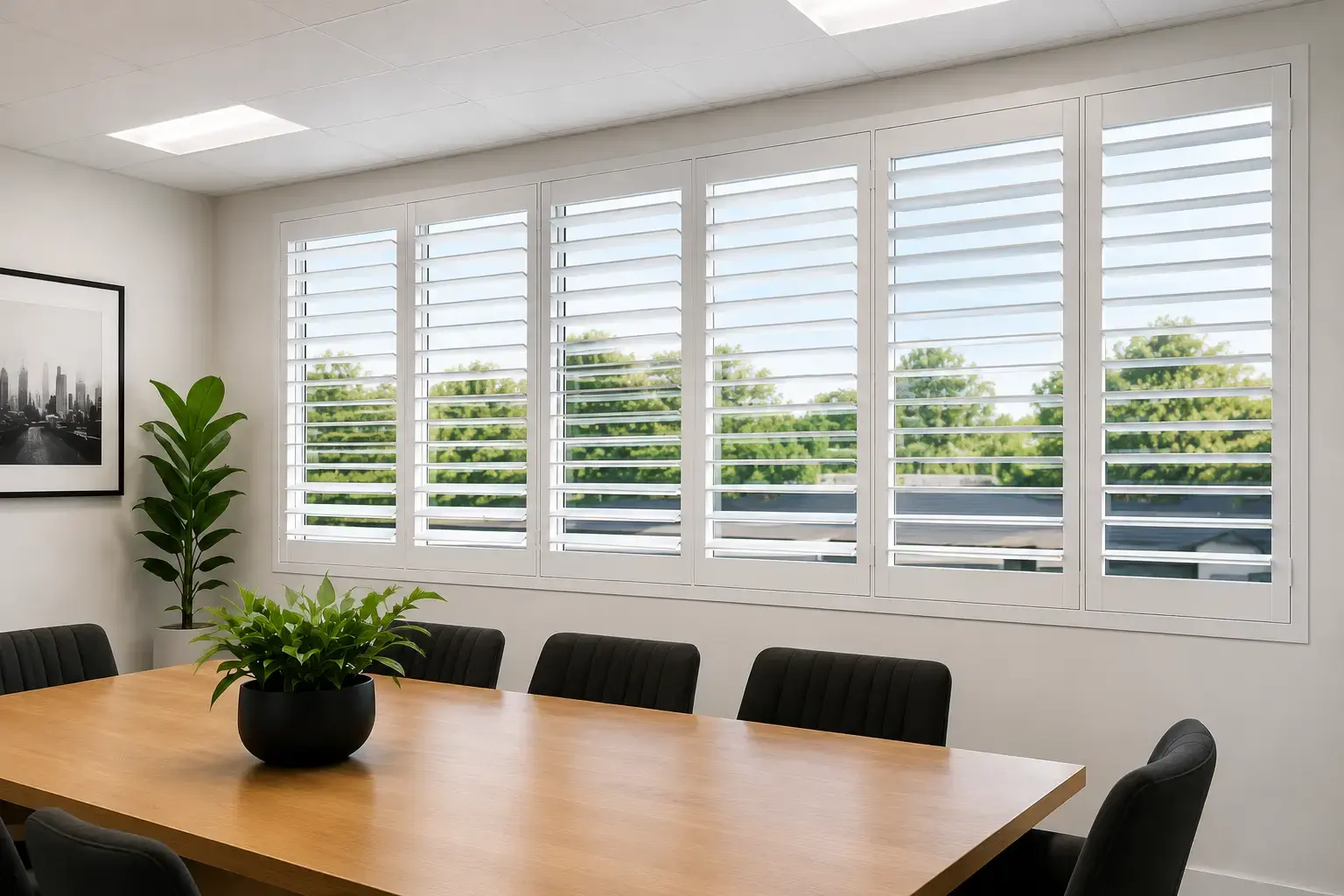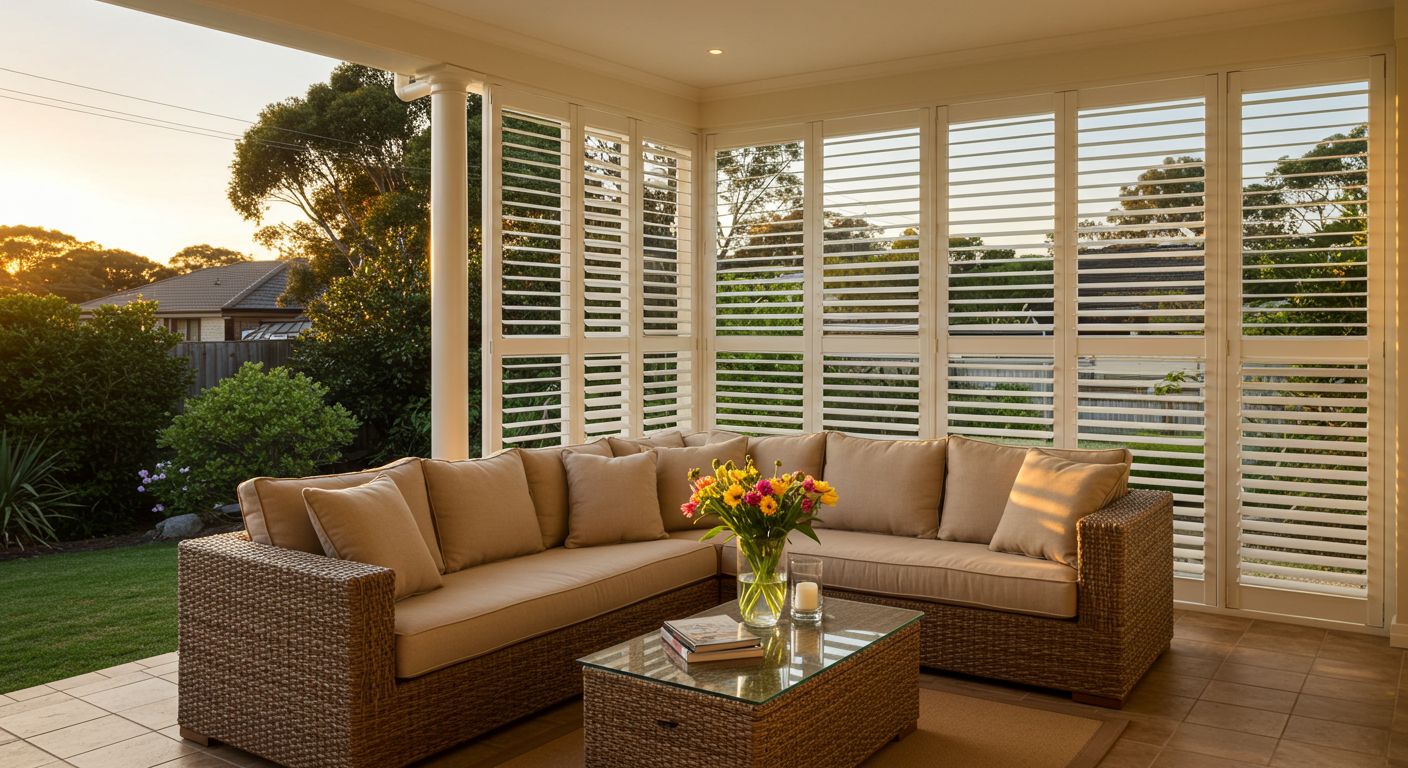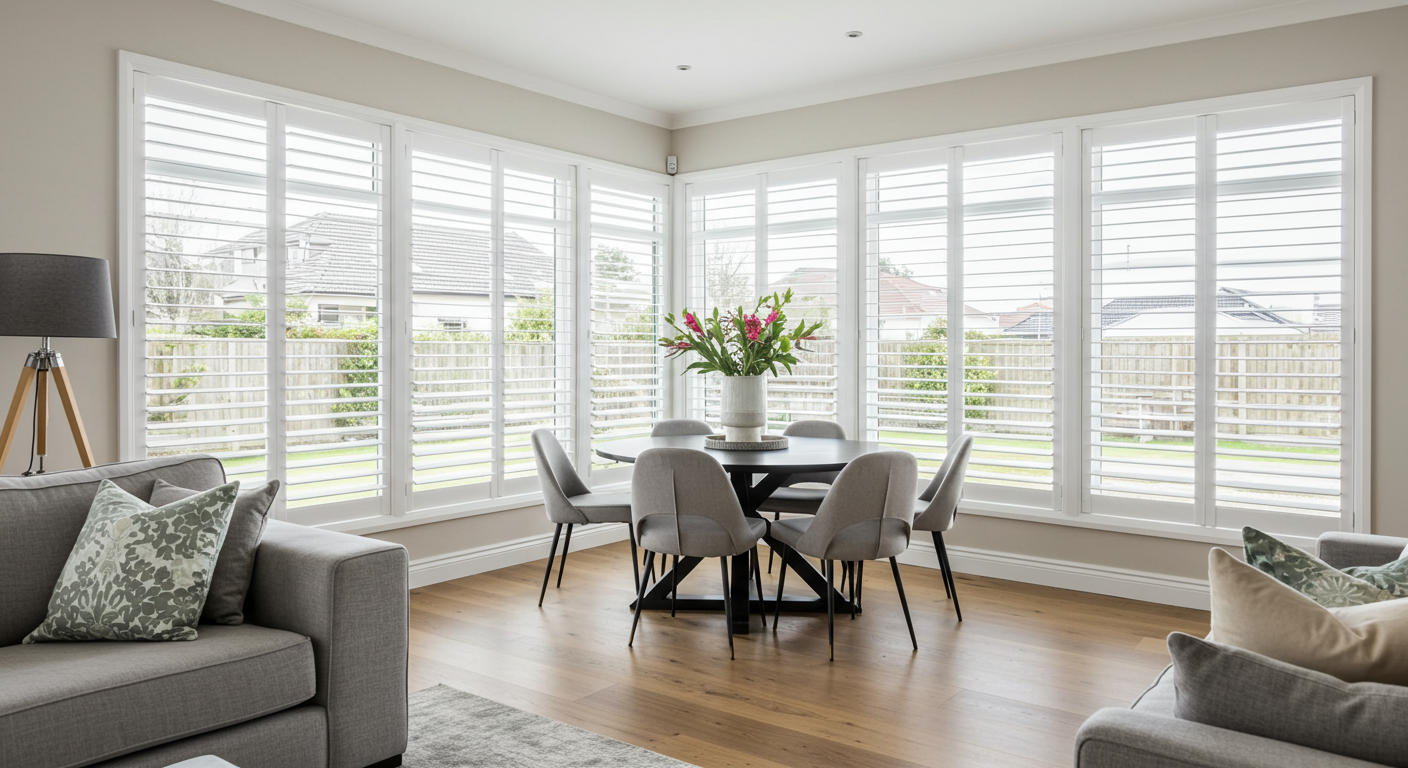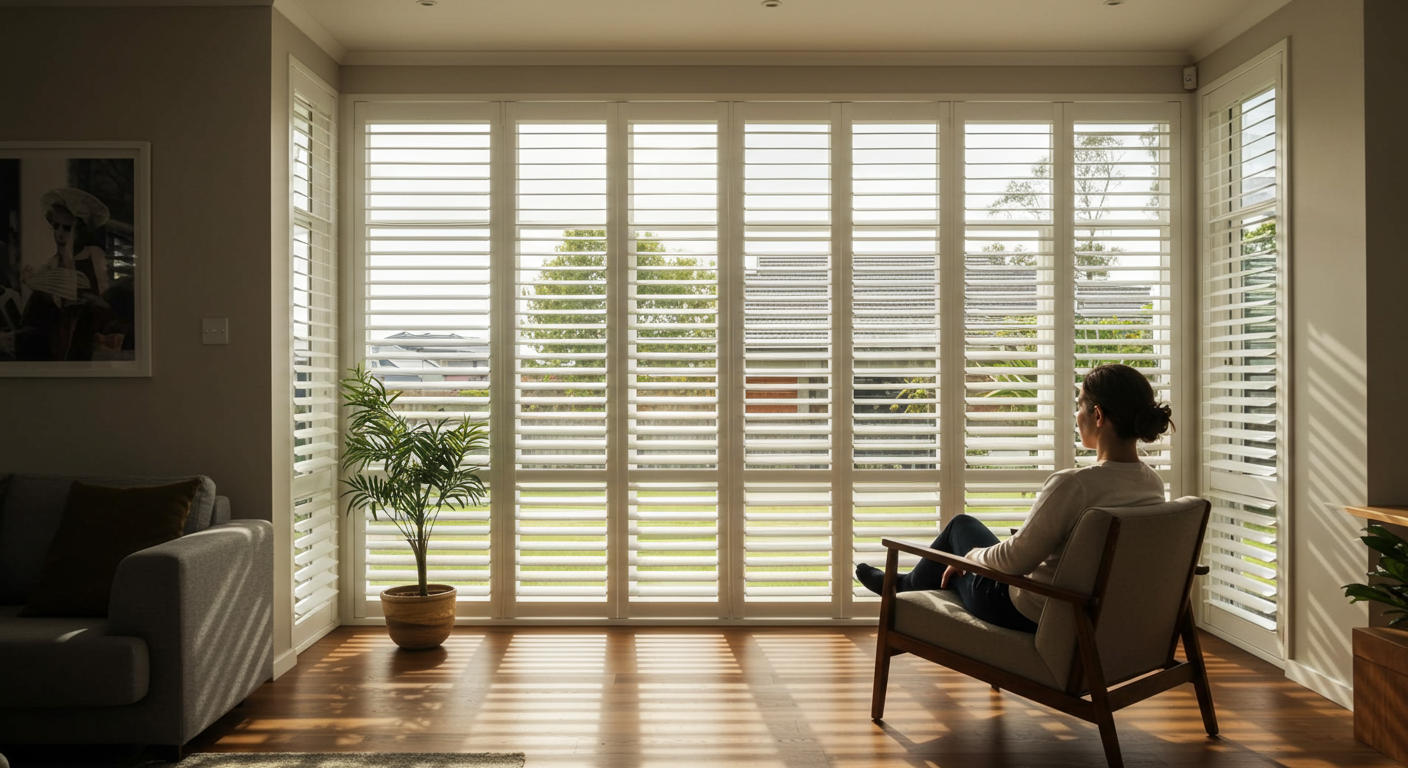
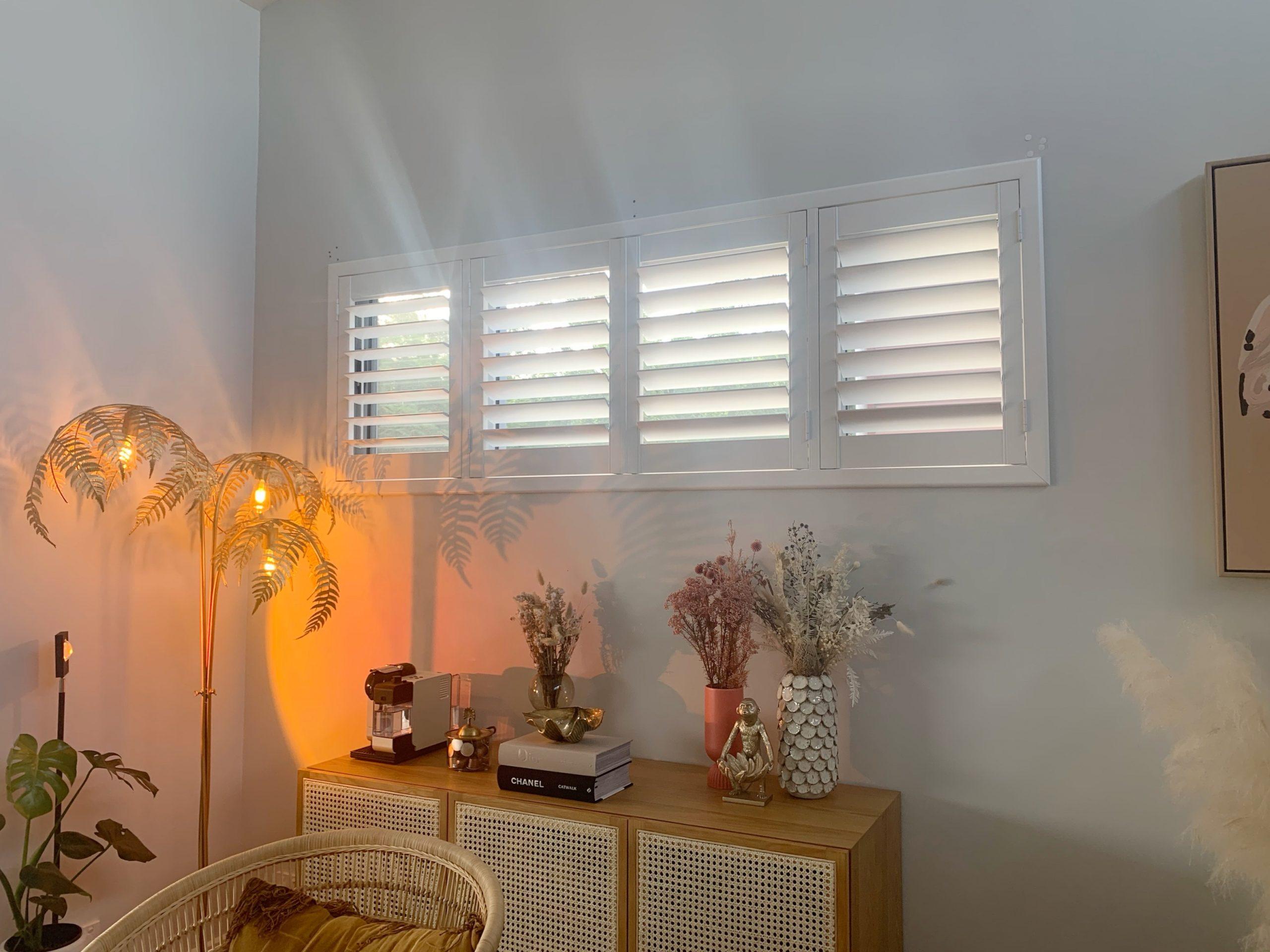
When thermal performance comes up in conversations about plantation shutters, PVC is often one of the first materials mentioned.
And there’s good reason for that. A shutter creates another physical barrier between the window and the room, helping moderate the effect of external conditions.
But there’s another material that deserves more attention.
Timber.
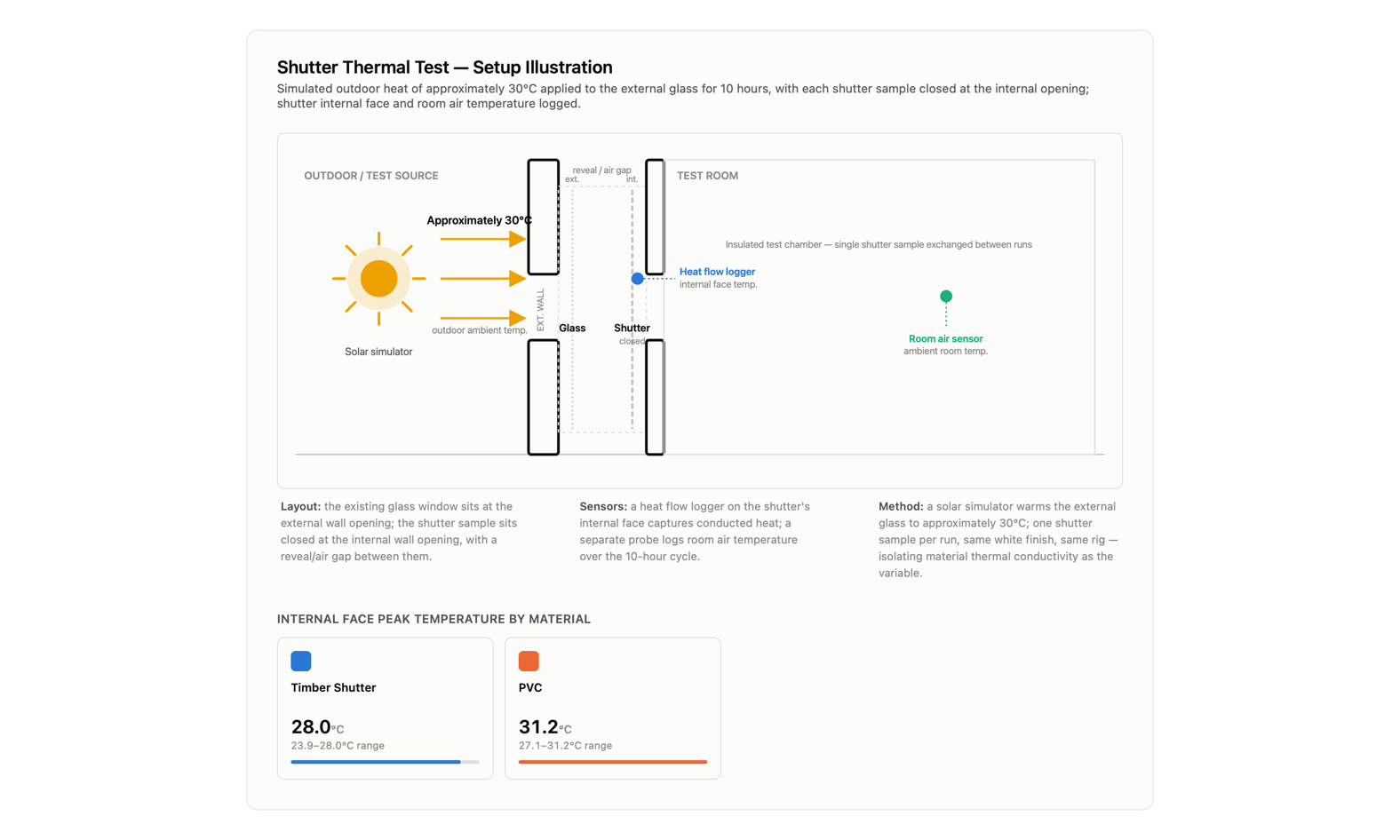
As part of some informal product evaluation, we recently compared white timber and PVC shutter materials under the same test conditions.
This isn’t an independent laboratory test and shouldn’t be interpreted as a certified thermal-performance or R-value assessment. It was a practical comparison designed to help us better understand how different shutter materials behaved, when exposed to the same heat source.
What did we see?
Heat energy equivalent to approximately 30 degrees Celsius was applied to the external wall/glass of the window the shutters were installed in, while we recorded temperatures inside.
The maximum temperatures recorded inside were:
| Material | Maximum recorded temperature | Maximum room temperatures |
|---|---|---|
| Timber shutter | 28.0°C | 23.1°C |
| PVC | 31.2°C | 24.4°C |
Because the samples share the same white finish, solar absorptivity is effectively constant across materials, the spread in results is driven by thermal conductivity, not colour. Timber transmits the least heat through to the internal face and room.
Under these particular test conditions, timber recorded a lower maximum internal-face temperature of the materials tested.
In this informal comparison, timber also demonstrated the strongest resistance to heat transfer of the materials tested. The room-temperature measurements reinforce the need to keep the results in perspective.
That’s an interesting result. Not because PVC performed poorly. It didn’t. The interesting point is much simpler:
We don’t talk enough about timber.
Timber is frequently chosen because of its appearance, natural character and ability to create larger, premium shutter panels.
But material selection isn’t purely aesthetic.
While measurable differences were observed, every material forms part of a complete shutter system, and thermal performance is only one consideration when choosing the right product for an application.
Maybe the material conversation needs to change.
For years, the shutter market has increasingly focused on PVC.
Price. Durability. Moisture resistance. Thermal efficiency.
They’re all valid considerations.
But timber shouldn’t simply be viewed as the traditional or premium-looking alternative.
Our in-house comparison suggests there is another reason to consider it:
Natural materials also make very good engineering materials.
And sometimes the material that’s been around the longest still has something to teach us.
Testing described above was conducted internally by Luxsol for a comparative product evaluation. It was not conducted by an independent accredited laboratory and does not establish certified R-values or thermal-performance ratings. Results relate only to the samples and conditions tested.